

Melanie Baker makes music about everything that hurts and everything that feels just right.
Based in Newcastle (UK), she writes with unflinching honesty — songs that sway between noisy
catharsis and quiet confession, between absurd humour and deep vulnerability. With pounding
drums, fuzzy guitars, and tender lyrical precision, Baker reclaims the grit and spirit of ’90s alt-
rock through a queer, modern lens.
Her world is a blend of chaos and compassion, where anxiety, anger, love and laughter coexist
in equal measure. She builds her songs like comic-book panels of emotional truth: hearts
pumping out of chests, steam whistling from collars, cartoon melancholy meeting genuine
tenderness. Her music invites the listener to cry, laugh, and scream along — sometimes all at
once.
Much of this universe — on stage, on the road, and at home — is seen through the lens of
photographer and partner Ellen Dixon, who documents their life together in intimate, analog
snapshots. The result is an ongoing portrait of a queer artist coming of age in the north of
England: a scrapbook of van rides, small venues, backstage nerves, and private joy.
Live, Baker’s performances blur the line between theatre and therapy. Alongside drummer
Adam Robson and multi-instrumentalist Jon Evans, she cracks jokes mid-breakdown, turns self-
deprecation into community, and transforms unease into something radiant. What begins as
personal confession often erupts into a roomful of strangers yelling the same truth at once.
Her work has been championed across BBC Radio 1, 2, and 6 Music, and her song “Double
Decker Death Machine” featured on BBC TV’s Waterloo Road. But acclaim has never been the
point. Baker’s art thrives in the messy, glorious space between pain and play — finding humour
in heartbreak and hope in absurdity.
Melanie Baker doesn’t hide from the chaos of feeling; she invites it in, hands it a microphone,
and makes it sing.
You May Also Be Interested In
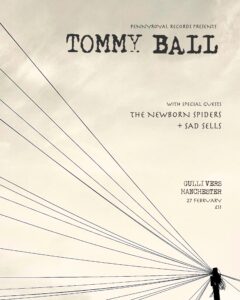
Pennyroyal Records Presents Tommy Ball
With guests The Newborn Spiders & Sad Sells